
Krispol: Leading the manufacturing industry with AI-driven operational transformation
Successful organizations never grow complacent about their market position, and Krispol exemplifies this principle. Despite being a well-established mid-size manufacturing company, leadership recognized that the future belonged to organizations that could harness artificial intelligence strategically rather than reactively.
The Opportunity
As one of the top manufacturers in their sector, Krispol’s market position was solid, but CEO Karol Krysinski understood that maintaining competitive advantage required more than operational excellence.
“The companies that will dominate the next decade won’t just be those with the best products,” Krysinski explained, “but those with the smartest operations, powered by AI that enhances human capability rather than replacing it.”
The vision was ambitious: implement AI across the entire organizational structure—from marketing and sales through HR, manufacturing, and logistics, extending to supporting functions like cost calculation and IT operations. This wasn’t about random technology adoption; it was about strategic transformation that would deliver measurable financial returns while positioning Krispol for sustained growth.

With operations in Poland, Krispol produces over 10,000 units annually and serving customers across 27 countries in Europe, nothing less than a comprehensive, data-driven approach to AI transformation would suffice to maintain Krispol’s competitive edge in an increasingly automated industry.
Arkadiusz’s partnership was pivotal in the strategic deployment and operationalization of AI across Krispol, driving our collective efforts to rapidly accelerate our AI-powered transformation.
The Solution
Krispol used the AI Navigator Framework to systematically identify and prioritize high-impact artificial intelligence opportunities across all business functions.
Comprehensive Screening
Initial screening identified over 20 potential AI applications, which were systematically evaluated using three critical criteria: FTE impact potential, AI readiness feasibility, and quantifiable financial returns.
Rigorous Evaluation
After 3 months of comprehensive analysis, this rigorous process narrowed focus to 3 high-impact areas with combined savings potential exceeding 2 million annually.
Solution Selection
The team evaluated 20-50 commercial solutions for each identified opportunity, negotiating subscription models, licensing fees, and pay-as-you-go arrangements that optimized total cost of ownership.
Krispol’s transformation required a dual approach: dramatically improve existing operational efficiency while simultaneously building new AI-powered capabilities for future growth. Equally important was the cultural transformation needed to ensure teams could effectively leverage these new technologies.
The company partnered with SKUZA AI and build internal team to lead the initiative. The centerpiece was the AI Navigator Framework—a proven methodology for comprehensively screening all processes across organizational levels to identify optimal AI implementation opportunities.

Foundation Building
Process Mapping
Comprehensive process mapping across all functions
AI Readiness
AI readiness assessment framework
ROI Modeling
Detailed ROI modeling for each opportunity
Implementation Roadmap
Implementation roadmap with specific timelines and responsibilities
The Projected Impact
Manufacturing Improvements
Customer Service & Quality
$2M+
Projected Annual Savings
35%
Planned Efficiency Increase
28%
Estimated Manual Processes Reduction
AI Navigator Framework
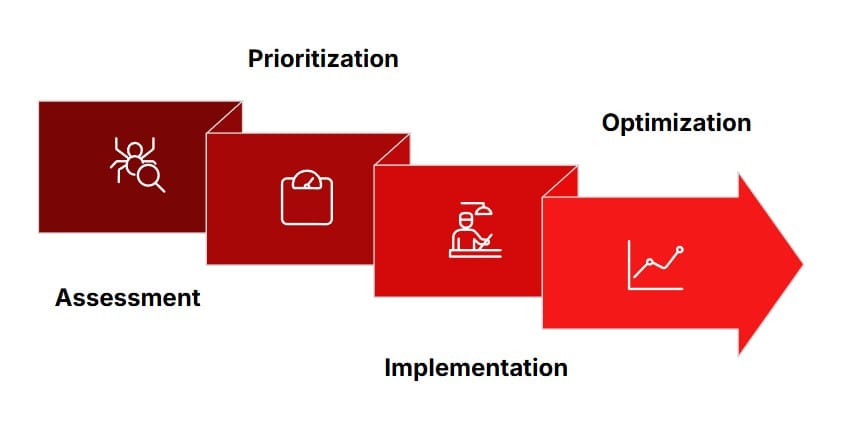
By following this framework, Krispol avoided common pitfalls of AI implementation, such as pursuing technology for its own sake or failing to align AI initiatives with business objectives. Instead, every AI project was evaluated based on its potential to deliver measurable business value and its feasibility given the organization’s current capabilities and data readiness.
Lessons Learned: Systematic Assessment
Start with systematic assessment, not random implementation
Quick wins build momentum and credibility
Krispol’s success stemmed from comprehensive process screening before technology selection. The AI Navigator Framework’s systematic evaluation of 50+ opportunities ensured resources focused on highest-impact areas.
By prioritizing opportunities with clear FTE impact and strong AI readiness, the company set up North Star as positive cash flow from initial implementations, building internal support for broader transformation and avoiding AI hype.
Lessons Learned: Building Foundations
Build the foundations needed to scale cost-effectively
Infrastructure, talent, and processes enable sustainable growth
Infrastructure
Establishing the technical foundation to support AI implementation
Talent
Investing in employee training and skill development
Processes
Redesigning workflows to maximize AI benefits
Change Management
Ensuring successful adoption and utilization
Lessons Learned: Enhancing Human Potential
AI transformation is about enhancing human potential, not replacing it
Technology accounts for only 40% of transformation success
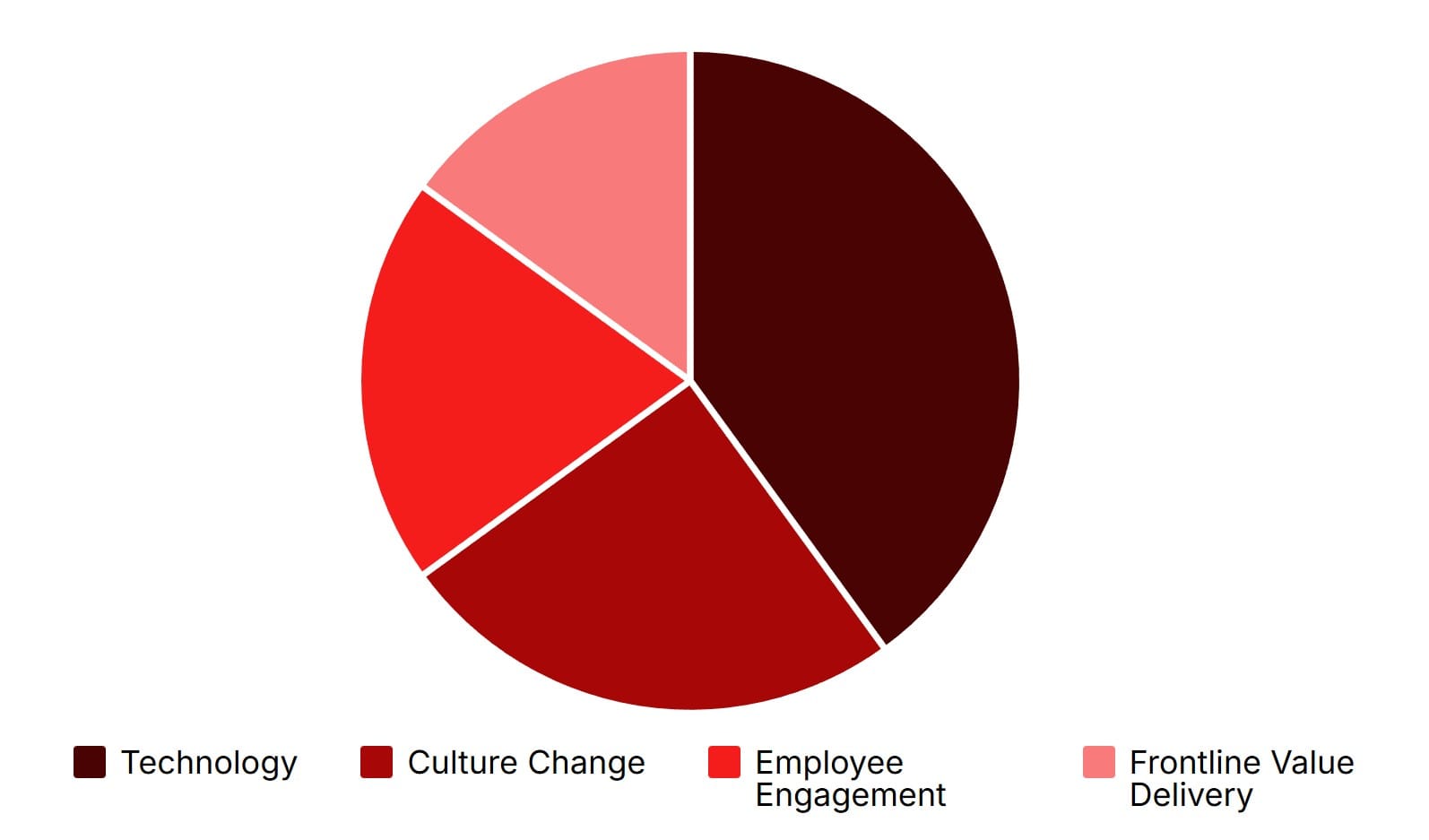
The most significant insight was that successful AI implementation focuses on augmenting human capabilities rather than automation for its own sake. Culture change, employee engagement, and frontline value delivery proved as critical as the technology itself.
Krispol’s approach of keeping people in strategic roles while AI handled repetitive tasks created enthusiastic adoption and sustained competitive advantage.
Krispol’s AI Transformation Journey
Vision & Strategy
CEO Karol Krysinski recognized the need for strategic AI implementation across the organization
Partnership & Framework
Partnered with SKUZA AI and implemented the AI Navigator Framework
Assessment & Prioritization
Identified over 20 potential applications, narrowed to 3 high-impact areas
Implementation & Results
Projected $2M+ annual savings, 35% efficiency increase, 28% reduction in manual tasks
Continuous Improvement
Self-funding cycle of AI initiatives positioning Krispol as an industry leader