
AI Automation in Data Collection: Transforming Efficiency and Scalability for a Global Manufacturer
This case study explores how a garage door manufacturer, a leading brand in the opening systems industry, overcame significant data management challenges by implementing an AI-powered solution.
The organization offers comprehensive assistance and advice for equipping homes and businesses with opening systems and reaches investors through an extensive network of showrooms and business partners. Operating in 27 countries, they needed to streamline the process of identifying potential business partners and distributors by automating data collection and analysis.
Organization Overview
The organization is a prominent manufacturer specializing in garage doors and windows systems.
Their extensive geographical footprint (27 countries) necessitates robust management of relationships with a diverse network of distributors, partners, and vendors.
The complexity of their business operations demands precise and comprehensive data management to support strategic expansion and operational excellence.
Problem Description: Challenges in Manual Data Collection
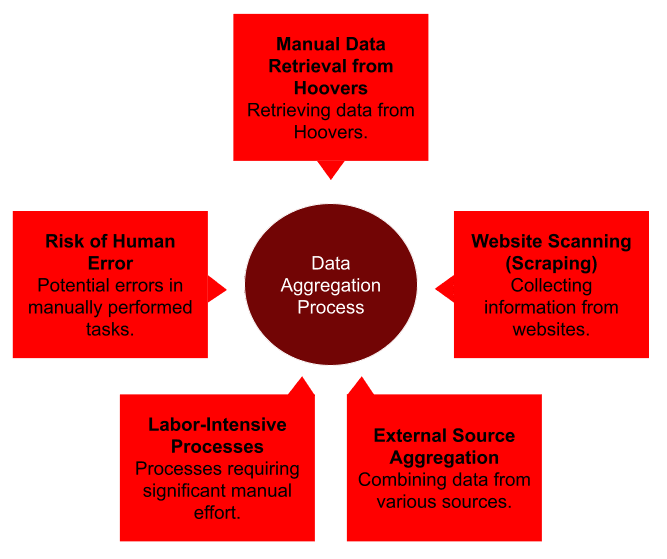
Key challenges included:
Data Volume and Complexity
Handling large volumes of data across multiple regions required significant human resources and time.
Accuracy and Consistency
Manual processes risked inconsistencies and inaccuracies, especially with extensive and varied datasets.
Scalability
As the organization aimed to scale operations to cover up to 20,000 companies, the manual approach was unsustainable.
Resource Allocation
Heavy reliance on manual data entry diverted resources from more strategic, value-added activities.
The main goal was to automate the data collection process and predict the best potential partners for future relationship building, thereby increasing accuracy, efficiency, and scalability.
AI Use Case: Automating Data Processing and Analysis

Vertex AI
To address these challenges, the organization implemented an AI-powered system, with part of the architecture leveraging Google Vertex AI for automation. The AI system focused on automating the extraction, filtering, and analysis of company data from the Hoovers database and other web sources. Vertex AI also facilitated the prompt generation and model tuning for specific company-related insights.
Prompt Engineering
Prompt engineering played a crucial role in making the system efficient by using targeted queries that allowed the AI to classify whether the companies were suitable distributors or partners. This integration of prompt modeling into the system ensured higher accuracy and relevance during the data filtering stage.

Scoring and Import
The processed data was then scored based on predefined criteria, allowing the team to prioritize the most promising companies for outreach. This scoring system streamlined the import of high-quality leads into the CRM, enabling more focused and effective relationship-building efforts.
Essential Data Points for Partner Identification
The AI solution focused on gathering specific data points essential for identifying potential distributors and partners:
Company Information
- Country
- Company name
- Tax identification number (NIP)
- Headquarters address
- Postal code
- City
Contact Details
- Contact person
- Phone number
Business Attributes
- Whether the company sells garage doors
- Operates an online store
- Deals with industrial doors
- Engages in other related sectors such as windows, shutters, or doors
Operational Metrics
- Annual revenue
- Currency of revenue
- Number of employees
Recommendation Metrics
A scoring system to recommend whether a company is worth contacting based on predefined criteria.
Key AI-Driven Functions
01. Filtering Companies from Hoovers
- Utilized AI to filter companies based on specific keywords and business categories relevant to the garage door industry.
- Enabled precise identification of potential distributors and partners by narrowing down the database to companies that matched the organization’s criteria.
02. Web Scraping for Enhanced Data
- AI-driven web scraping tools extracted additional information from company websites.
- Filled in missing data points and gathered supplementary details such as specific product offerings and online store presence.
03. AI and Prompt Modeling for Classification
- The AI system used prompt modeling to classify business activities. This allowed the system to determine if a company fit into specific categories (such as selling garage doors or industrial doors).
- Prompts were tuned to answer specific questions, such as whether a company sold windows or had an online store, with results returned in JSON format for easy integration.
04. Precise Scoring
- Implemented a scoring algorithm that evaluated companies based on relevance, size, and market presence, enabling prioritized outreach to the most promising leads. Scoring outputs prioritized list of companies which are imported to Hubspot.
Impact and Metrics: Measuring Success
67.7%
Cost Reduction
The AI-driven automation led to a remarkable 67.7% reduction in costs compared to the manual data collection process. Savings were realized through decreased labor costs and more efficient use of resources.
10x
Time Efficiency Increase
The automated system was approximately ten times faster than the manual approach. Tasks that previously took hours were now completed in minutes, enabling the organization to process large datasets rapidly and meet tight deadlines.
60%
Better Focus
With AI handling data collection and opportunities scoring, business teams were able to focus on right customers, eliminating 60% of visits to customers who are not the ideal profile opportunities.
25%
Less Travel
This reduction in unnecessary visits not only saved travel expenses but also allowed sales teams to allocate their time more effectively, 12 team members productivity and improving client engagement quality.
Execution Approach: From Concept to Implementation
Research and Tool Selection
The project commenced with extensive research to identify suitable AI tools and software. The organization evaluated various options, including subscription-based tools and custom-built “micro” tools tailored to their specific needs. Key considerations included:
- Integration Capabilities: Ensuring seamless integration with the Hoovers database and other data sources.
- Cost Efficiency: Balancing tool capabilities with budget constraints, with platform costs estimated between $120–$500 monthly.
- Scalability: Selecting tools that could handle varying levels of data extraction, such as scraping 100 websites per day.
Infrastructure Setup
The technical infrastructure was established using a server running PHP and MySQL scripts to manage the data extraction and storage processes. Key components included:
- Data Scrapers: Automated tools to extract data from Hoovers and company websites.
- Databases: Centralized storage for collected data, facilitating easy access and analysis.
Implementation Process and Configuration
API Integration
AI-powered APIs were integrated to perform text and data analysis. These APIs enabled the system to filter, rank, and recommend companies based on the organization’s predefined criteria.
Process Configuration
The team meticulously configured the AI tools to ensure seamless operation. This involved automating data workflows and implementing semi-automated processes where full automation was not feasible.
Training and Documentation
Comprehensive training materials and documentation were developed, including instructional videos and detailed user manuals covering system functionalities and troubleshooting.
Implementation and Scaling
The AI-powered system was implemented to generate data for 300 companies, with the capability to scale for larger datasets. The system was later expanded to handle data collection for up to 20,000 companies, demonstrating its robustness and scalability.
Deliverables and Outcomes
Comprehensive Data File
Delivered in CSV format, containing detailed information on 300 companies, including contact details, business attributes, and recommendation scores.
Tool List and Procedures
A complete list of tools used, along with implemented procedures to generate and maintain the database.
Instructional Materials
Short instructional videos and documentation to guide users in utilizing the AI system effectively.
Scalable Process
A system designed to easily expand data collection efforts, enabling the organization to efficiently gather information on additional companies as needed.
Conclusion: Harnessing AI for Strategic Growth
This case study exemplifies the transformative potential of AI in optimizing data collection and analysis for global manufacturers. By automating the extraction, filtering, and analysis of data from the Hoovers database and other sources, the organization achieved significant cost and time savings while enhancing scalability and maintaining high data quality.
The successful implementation of the AI-powered system not only streamlined the identification of potential business partners and distributors but also positioned the company for sustained growth in a competitive global market. This case study underscores the value of leveraging AI to drive operational efficiency and strategic decision-making, providing a blueprint for other organizations seeking to enhance their data management processes.
Key Takeaways
Efficiency and Cost Savings
AI automation can drastically reduce both the time and costs associated with large-scale data collection.
Scalability
AI systems can easily scale to handle increasing data volumes without compromising productivity.
Balanced Accuracy
While AI may introduce a minor error margin, the trade-off is often justified by the gains in efficiency and scalability.
Strategic Resource Allocation
Automating routine tasks allows organizations to focus their human resources on more strategic, value-added activities.
By embracing AI, the organization not only overcame its data collection challenges but also set a foundation for continued innovation and growth in the global marketplace.